

Tesamorelin 10mg Growth Hormone–Releasing Hormone (GHRH) Research Peptide
R 1,400.00
Tesamorelin is a synthetic growth hormone–releasing hormone (GHRH) analogue widely researched for its interaction with the body’s natural pulsatile release of growth hormone (GH) through pituitary-signaling pathways, contributing to downstream insulin-like growth factor 1 (IGF-1)–related signaling pathways.
Unlike direct exogenous growth hormone administration, Tesamorelin is commonly investigated for its interaction with endogenous growth hormone–signaling pathways by supporting the body’s natural GH-release mechanisms rather than supplying growth hormone directly.
Research involving Tesamorelin commonly investigates its interaction with:
- Growth hormone– and IGF-1–related signaling pathways
- Metabolic- and mitochondrial-related mechanisms
- Body-composition and visceral-fat research
- Recovery-focused physiological pathways
- Muscle-maintenance and regenerative signaling
- Sleep- and recovery-related physiology
- Neuroendocrine- and cognitive-function research
- Healthy-aging and physiological-resilience investigations
Tesamorelin is particularly well known in research involving:
- Visceral adipose-tissue investigations
- Lean-body-composition pathways
- Recovery-focused physiological mechanisms
- Neuroendocrine and metabolic-related pathways
- Exercise-recovery and body-composition research
Compared with direct growth hormone administration, Tesamorelin is commonly researched for its more physiologically regulated GH-release profile through upstream pituitary-signaling pathways.
BioPeptics™ Tesamorelin is supplied in sterile lyophilised powder form for enhanced peptide stability, purity, and long-term research integrity during laboratory handling and experimental applications.
For Research Use Only
Not intended for human consumption or therapeutic use.
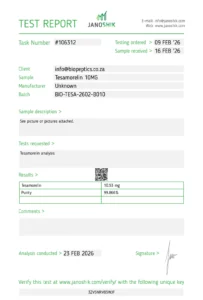
How Tesamorelin Works
Tesamorelin functions as a synthetic analogue of growth hormone–releasing hormone (GHRH), designed to stimulate the anterior pituitary gland to increase the body’s natural pulsatile release of growth hormone (GH).
This increase in endogenous GH signaling subsequently promotes downstream production of insulin-like growth factor 1 (IGF-1), a key pathway involved in:
- Metabolism
- Recovery physiology
- Tissue-maintenance pathways
- Body-composition regulation
- Cellular-repair signaling
Unlike exogenous growth hormone administration, Tesamorelin works by supporting the body’s own GH-release mechanisms through GHRH receptor activation. Research suggests this may support a more physiologically regulated growth hormone response profile.
Research Applications
Tesamorelin is commonly investigated in research involving:
- Visceral-fat metabolism
- Lean-mass preservation
- Lipid metabolism and body-composition pathways
- Recovery and regenerative signaling
- Sleep and recovery physiology
- Neuroendocrine and cognitive-function research
- Healthy-aging and metabolic-support studies
Research models have also explored Tesamorelin’s potential influence on:
- Fat oxidation and energy utilization
- Cellular-repair and recovery signaling
- Protein-synthesis pathways
- Sleep-related GH pulsatility
- IGF-1–mediated anabolic-signaling pathways
Due to its selective GHRH activity, Tesamorelin is often researched for its ability to stimulate endogenous GH release while maintaining natural feedback regulation within the growth hormone axis.
For Research Use Only
Not intended to diagnose, treat, cure, or prevent any disease.
Research Applications
Growth Hormone & IGF-1 Axis Research
Tesamorelin is widely researched for its ability to stimulate endogenous growth hormone release and increase downstream IGF-1 signaling.
Research models investigate its potential role in:
- Pulsatile GH secretion
- Anabolic-signaling pathways
- Protein-synthesis pathways
- Tissue-maintenance mechanisms
- Endocrine regulation associated with recovery and body composition
Visceral Fat & Body-Composition Research
One of the most widely researched applications of Tesamorelin involves visceral adipose tissue (VAT) and metabolic body-composition research.
Experimental models explore its potential influence on:
- Visceral-fat pathways
- Lipid metabolism
- Waist-circumference changes
- Lean-mass preservation
- Metabolic efficiency
Muscle Preservation & Recovery Research
Tesamorelin is frequently investigated in muscle-recovery and regenerative research models involving:
- Training-adaptation pathways
- Tissue-repair signaling
- Recovery physiology
- Lean-muscle preservation
- Recovery from physical stress
Research also explores its interaction with anabolic-recovery pathways and regenerative signaling mechanisms.
Healthy-Aging & Regenerative Research
Due to its interaction with growth hormone pathways, Tesamorelin is commonly researched in healthy-aging and regenerative research models focused on:
- Cellular-maintenance pathways
- Recovery capacity
- Body-composition regulation
- Tissue integrity
- Age-related anabolic-signaling decline
Cognitive & Neuroendocrine Research
Research involving Tesamorelin also explores:
- Neuroendocrine-signaling pathways
- Sleep-related GH pulsatility
- Cognitive-function research
- Nervous-system regulation
Some studies investigate potential relationships between GH/IGF-1 signaling and cognitive-function pathways.
Metabolic & Lipid-Profile Research
Tesamorelin is commonly researched in metabolic models examining:
- Fat oxidation
- Lipid utilization
- Insulin sensitivity
- Glucose regulation
- Energy metabolism
Investigations often focus on the interaction between growth hormone signaling and metabolic-health markers.
Sleep & Recovery Physiology Research
Because endogenous growth hormone release is closely associated with deep-sleep physiology, Tesamorelin is also researched in sleep-quality and recovery-focused models involving:
- Restorative physiology
- Overnight recovery processes
- Circadian hormone regulation
- Recovery-related signaling pathways
For Research Use Only
Not intended to diagnose, treat, cure, or prevent any disease.
Synergistic Research Applications
Tesamorelin is frequently researched alongside complementary peptides and metabolic-support compounds due to its ability to stimulate endogenous growth hormone and IGF-1 signaling pathways.
In research settings, combination protocols are explored for their potential role in:
- Recovery physiology
- Body-composition regulation
- Regenerative signaling pathways
- Metabolic function
- Healthy-aging research
- Neuroendocrine balance
With Ipamorelin
Tesamorelin is commonly researched alongside Ipamorelin in growth hormone–related research models.
Tesamorelin acts through growth hormone–releasing hormone (GHRH) pathways, while Ipamorelin interacts with ghrelin receptor signaling pathways (GHSR-1a).
Research suggests this dual-pathway interaction may support:
- Enhanced pulsatile GH-release signaling
- Increased downstream IGF-1 activity
- Recovery-related signaling pathways
- Body-composition research
- Sleep and recovery physiology
With CJC-1295
Tesamorelin is also investigated in protocols involving CJC-1295 to explore prolonged GHRH pathway activity and sustained growth hormone–signaling pathways.
These combinations are researched in models involving:
- Recovery physiology
- Lean-mass preservation
- Body-composition pathways
- Regenerative signaling
- Metabolic-support mechanisms
With Recovery & Regenerative Peptides
Tesamorelin is frequently researched alongside peptides such as:
- BPC-157
- TB-500
- GHK-Cu
These combinations are investigated for their potential complementary roles in:
- Tissue-repair pathways
- Recovery physiology
- Collagen-related signaling
- Inflammation-related pathways
- Regenerative signaling mechanisms
With Metabolic & Body-Composition Compounds
In metabolic research models, Tesamorelin is sometimes studied alongside compounds involved in:
- Fat metabolism
- Mitochondrial function
- Glucose regulation
- Lipid oxidation
- Energy-utilization pathways
Researchers investigate whether these combinations may support:
- Lean-mass preservation
- Visceral-fat research pathways
- Recovery capacity
- Metabolic efficiency
With Sleep & Recovery Research Protocols
Because growth hormone release is closely associated with deep-sleep physiology and overnight recovery processes, Tesamorelin is also researched in sleep-focused protocols aimed at:
- Restorative recovery pathways
- Neuroendocrine balance
- Circadian hormone regulation
- Recovery-related signaling
Selective Endogenous GH-Signaling Research
Unlike direct exogenous growth hormone administration, Tesamorelin is researched for its ability to stimulate the body’s own GH-release pathways while maintaining natural physiological feedback regulation within the growth hormone axis.
For Research Use Only
Not intended to diagnose, treat, cure, or prevent any disease.
Technical Information
Compound Name:
Tesamorelin
Chemical Classification:
Synthetic Growth Hormone–Releasing Hormone (GHRH) Analogue
Composition
Tesamorelin is a synthetic peptide analogue structurally related to endogenous growth hormone–releasing hormone (GHRH), designed to stimulate natural growth hormone release through pituitary GHRH receptor activation.
Peptide Structure
- Synthetic stabilized GHRH analogue
- Modified amino-acid sequence for enhanced stability and prolonged biological activity
- Acetate salt form commonly utilized in research preparations
Molecular Formula:
C₂₂₁H₃₆₆N₇₂O₆₇S
Appearance:
White to off-white lyophilized powder
Solubility:
Water soluble
Research Category:
Growth hormone secretagogue and metabolic research peptide
For Laboratory and Research Use Only
Not for human consumption or therapeutic use.
Tesamorelin 10mg
Mixing & Research Protocol
Growth Hormone–Related Research • Visceral-Fat Research • Recovery Physiology • Metabolic Support
For Research Use Only
Mixing Instructions
Reconstitute Tesamorelin 10mg with 3ml bacteriostatic water.
Important Mixing Guidelines
- Inject the bacteriostatic water slowly down the side of the vial.
- Allow the peptide to dissolve naturally.
- Swirl gently if needed.
- Do not shake the vial.
- Store the reconstituted peptide refrigerated at 2–8°C.
- Utilize sterile handling practices and avoid repeated contamination of the vial.
Concentration Guide
10mg mixed with 3ml bacteriostatic water provides an approximate concentration of:
3.33mg/ml
- Every 10 insulin units (0.1ml) ≈ 333mcg
- Every 1 insulin unit ≈ 33mcg
Introductory Research Protocol
Researchers may choose to begin with a lower administration amount to assess individual tolerability before progressing to standard research protocols.
| Research Amount | Volume | U100 Insulin Syringe Units |
|---|---|---|
| 250mcg | 0.075ml | 7.5 units |
| 500mcg | 0.15ml | 15 units |
Research Note
Some researchers elect to begin at 250–500mcg daily for several days before gradually increasing to higher investigational amounts if well tolerated.
Common Research Timing
- Pre-sleep administration
- Fasted administration is commonly researched
Standard Research Administration Guide
| Research Amount | Volume | U100 Insulin Syringe Units |
|---|---|---|
| 500mcg | 0.15ml | 15 units |
| 1mg | 0.30ml | 30 units |
| 1.5mg | 0.45ml | 45 units |
| 2mg | 0.60ml | 60 units |
Approximate Vial Duration
| Daily Research Amount | Approximate Duration |
|---|---|
| 500mcg daily | ~20 days |
| 1mg daily | ~10 days |
| 1.5mg daily | ~6–7 days |
| 2mg daily | ~5 days |
Typical Research Protocols
1. Growth Hormone & IGF-1 Research
Research Amount: 500mcg–1mg
Frequency: Once daily
Timing: Pre-sleep
Typical Duration: 8–12 weeks
Research Notes
Commonly investigated for endogenous growth hormone stimulation and downstream IGF-1 signaling pathways.
2. Visceral Fat & Body-Composition Research
Research Amount: 1–2mg daily
Frequency: Once daily
Timing: Evening or pre-sleep
Typical Duration: 8–16 weeks
Research Notes
Commonly researched for visceral adipose tissue (VAT) and metabolic body-composition pathways.
3. Recovery & Neuroendocrine Research
Research Amount: 500mcg–1mg
Frequency: Once daily
Typical Duration: 8–12 weeks
Research Notes
Frequently explored in recovery-focused, neuroendocrine, and growth hormone physiology research models.
Typical Research Cycle Duration
- Standard research cycles commonly range from 8–16 weeks.
- Longer protocols may involve monitoring of recovery and metabolic-related markers.
- Protocol duration may vary depending on research objectives and experimental design.
Important Research Notes & Safety Information
- Rotate administration sites regularly.
- Utilize sterile single-use administration equipment.
- Store reconstituted peptide refrigerated at 2–8°C.
- Protect from excessive heat and direct sunlight.
- Do not shake after mixing.
- Higher administration amounts do not necessarily produce proportionally greater pathway-related observations.
- Researchers commonly begin with the lowest investigational amount and increase gradually only if well tolerated.
Important Safety Information
Although uncommon, hypersensitivity reactions have been reported with Tesamorelin and other growth hormone–releasing hormone (GHRH) analogues. Severe allergic reactions, including anaphylaxis, have been reported in clinical and experimental settings.
Metabolic Research Considerations
Tesamorelin may influence glucose regulation and insulin sensitivity. Additional monitoring may be warranted in research involving:
- Diabetes
- Prediabetes
- Insulin resistance
- Metabolic syndrome
- Impaired glucose regulation
Rare but Serious Reactions May Include
- Severe injection-site reactions
- Generalized rash or hives
- Significant itching
- Facial, lip, tongue, or throat swelling
- Wheezing or difficulty breathing
- Chest tightness
- Severe allergic reactions (anaphylaxis)
Important Warning
Anaphylaxis is a medical emergency and may be life-threatening.
Symptoms may include:
- Difficulty breathing
- Swelling of the face, lips, tongue, or throat
- Severe rash or hives
- Wheezing
- Dizziness or fainting
- Rapid heartbeat
- Sudden weakness or collapse
Immediate medical attention should be sought if symptoms of a severe allergic reaction occur.
Individuals with a history of severe allergies, asthma, hypersensitivity reactions, or previous reactions to peptide therapies should exercise additional caution.
Administration should be discontinued immediately if a significant hypersensitivity reaction is suspected.
Commonly Investigated Research Areas
- Growth hormone and IGF-1 signaling
- Visceral-fat metabolism
- Body-composition regulation
- Metabolic health and endocrine signaling
- Recovery and tissue-maintenance pathways
- Sleep and neuroendocrine physiology research
For Research Use Only
Not approved by the FDA, SAHPRA, EMA, MHRA, or any other regulatory authority for the diagnosis, treatment, cure, or prevention of disease.
Not intended for human consumption, therapeutic use, or self-medication.
This product is supplied strictly for laboratory and research purposes only.
Possible Side Effects
Observed in Research Settings
Because Tesamorelin stimulates endogenous growth hormone and downstream IGF-1 signaling pathways, responses and tolerability observations may vary depending on:
- Research amount
- Protocol duration
- Metabolic status
- Individual sensitivity
- Concurrent research compounds
Commonly Reported Research Observations
- Mild water retention
- Injection-site redness, itching, or irritation
- Temporary swelling or localized welts at administration sites
- Headaches
- Fatigue or drowsiness
- Mild nausea
- Flushing or warmth sensations
- Increased hunger or appetite-related changes
Growth Hormone–Related Research Observations
Due to increased growth hormone and IGF-1 signaling activity, some research settings have observed:
- Joint stiffness or discomfort
- Mild bloating
- Fluid-retention–related observations
- Tingling or numbness in the extremities
- Muscle tightness
- Changes in sleep intensity or vivid dreams
Metabolic & Endocrine Considerations
Research involving Tesamorelin may warrant monitoring for:
- Changes in glucose regulation
- Altered insulin sensitivity
- Elevated blood glucose levels (hyperglycemia)
- Appetite fluctuations
- Temporary shifts in metabolic markers
- Hormonal adaptation during prolonged protocols
Administration & Handling Considerations
Improper storage, reconstitution, or administration techniques may increase the likelihood of:
- Injection-site irritation
- Local inflammation
- Reduced peptide stability
- Reduced compound integrity
Rare but Serious Reactions
Although uncommon, hypersensitivity reactions have been reported with Tesamorelin and other growth hormone–releasing hormone (GHRH) analogues. Severe allergic reactions, including anaphylaxis, have been reported with Tesamorelin use.
Rarely reported reactions may include:
- Severe injection-site reactions
- Generalized rash or hives
- Significant itching
- Facial, lip, tongue, or throat swelling
- Wheezing or difficulty breathing
- Chest tightness
- Severe allergic reactions (anaphylaxis)
Important Warning
Anaphylaxis is a medical emergency and may be life-threatening.
Symptoms may include:
- Difficulty breathing
- Swelling of the face, lips, tongue, or throat
- Severe rash or hives
- Wheezing
- Dizziness or fainting
- Rapid heartbeat
- Sudden weakness or collapse
Immediate medical attention should be sought if symptoms of a severe allergic reaction occur.
Administration should be discontinued immediately if a significant hypersensitivity reaction is suspected.
Additional Research Notes
- Higher research amounts do not necessarily produce proportionally greater effects and may increase the likelihood of side effects.
- Water retention and mild administration-site reactions are among the more commonly observed responses in research settings.
- Long-term growth hormone–related research may warrant monitoring of metabolic and endocrine-related markers.
- Research involving diabetes, insulin resistance, prediabetes, or metabolic disorders may warrant additional monitoring of glucose regulation and insulin sensitivity.
- Researchers commonly begin with the lowest investigational amount and increase gradually only if well tolerated.
For Research Use Only
Not approved by the FDA, SAHPRA, EMA, MHRA, or any other regulatory authority for the diagnosis, treatment, cure, or prevention of disease.
Not intended for human consumption, therapeutic use, or self-medication.
This product is supplied strictly for laboratory and research purposes only.
Use With Caution in Research Contexts
Because Tesamorelin influences endogenous growth hormone and downstream IGF-1 signaling pathways, additional caution may be warranted in research models involving endocrine, metabolic, cardiovascular, proliferative, or respiratory-related conditions.
Additional Monitoring May Be Considered in Research Models Involving
- Diabetes or impaired glucose regulation
- Prediabetes
- Insulin resistance or metabolic syndrome
- Cardiovascular disease or uncontrolled hypertension
- Fluid-retention susceptibility or edema-related conditions
- Hormonal or endocrine-related disorders
- Sleep apnea or significant respiratory-related conditions
- Chronic migraines or neurological sensitivity
- Kidney or liver impairment
- Multiple concurrent growth hormone–related research compounds
Carefully Evaluate Research Models With
- Active or suspected malignancy-related conditions
- History of growth-sensitive tumors
- Severe uncontrolled endocrine-related disorders
- Severe uncontrolled cardiovascular disease
- Pregnancy- or breastfeeding-related research contexts
- Known hypersensitivity to Tesamorelin, formulation excipients, or peptide compounds
- Previous severe allergic reactions to peptide therapies
Additional Research Considerations
Because Tesamorelin may increase endogenous growth hormone and downstream IGF-1 signaling activity, research involving abnormal cellular proliferation, tumor-growth pathways, or uncontrolled metabolic disease may warrant additional caution and individualized evaluation.
Long-term or higher-exposure research protocols may involve monitoring of:
- Glucose regulation and insulin sensitivity
- Blood glucose variability
- Fluid retention and blood-pressure observations
- IGF-1 and metabolic-related markers
- Individual tolerability and physiological response
- Injection-site reactions and hypersensitivity responses
Hypersensitivity Considerations
Although uncommon, severe allergic reactions, including anaphylaxis, have been reported with Tesamorelin use.
Administration should be discontinued immediately and urgent medical evaluation sought if significant hypersensitivity reactions occur, including:
- Generalized rash or hives
- Facial, lip, tongue, or throat swelling
- Wheezing or difficulty breathing
- Severe injection-site reactions
- Signs or symptoms of anaphylaxis
Important Notice
Tesamorelin is supplied strictly as a laboratory research compound and is not approved by the FDA, SAHPRA, EMA, MHRA, or any other regulatory authority for the diagnosis, treatment, cure, or prevention of disease.
For Research Use Only
Not intended for human consumption, therapeutic use, or self-medication.
This product is supplied strictly for laboratory and research purposes only.
Summary
Tesamorelin is a synthetic growth hormone–releasing hormone (GHRH) analogue researched for its ability to stimulate endogenous growth hormone release and increase downstream IGF-1 signaling.
It is widely investigated in research involving:
- Visceral-fat metabolism
- Body-composition pathways
- Recovery physiology
- Metabolic function
- Healthy-aging research
- Neuroendocrine-signaling pathways
Unlike exogenous growth hormone administration, Tesamorelin works by stimulating the body’s own GH-release mechanisms through GHRH receptor activation, allowing researchers to investigate growth hormone–related signaling while maintaining natural physiological feedback regulation within the GH axis.
Observed responses in research settings are generally research amount–dependent and commonly include:
- Mild water retention
- Temporary administration-site irritation
- Headaches
- Fatigue
- Mild bloating
- Appetite-related changes
- Changes in sleep intensity
Proper reconstitution, sterile handling practices, slow administration, and regular administration-site rotation are important for maintaining peptide stability and minimizing local irritation during research use.
For Research Use Only
Not intended to diagnose, treat, cure, or prevent any disease.
Be the first to review “Tesamorelin 10mg Growth Hormone–Releasing Hormone (GHRH) Research Peptide”
Related products




Reviews
There are no reviews yet.