

BPC-157 – 10 mg (Body Protection Compound-157)
R 1,000.00
BPC-157 (Body Protection Compound-157)
BPC-157 (Body Protection Compound-157) is a synthetic peptide derived from a protective protein sequence originally associated with gastric and tissue-protective research pathways. It is widely researched for its interaction with tissue-repair mechanisms, regenerative signaling, angiogenesis-related pathways, gut-integrity pathways, and recovery-focused physiological research.
Research involving BPC-157 commonly investigates its interaction with:
- Tissue-remodeling and regenerative pathways
- Tendon-, ligament-, and connective-tissue research
- Gut-integrity and gastrointestinal-related mechanisms
- Angiogenesis and vascular-support signaling
- Recovery-focused physiological pathways
- Inflammation-related signaling mechanisms
- Extracellular-matrix and tissue-maintenance pathways
- Healthy-aging and physiological-resilience research
Because BPC-157 interacts with multiple regenerative and tissue-maintenance pathways, it is frequently investigated in tissue-support, gut-integrity, recovery-focused, and physiological-resilience research models.
BPC-157 is also commonly researched alongside compounds such as:
- TB-500 (Thymosin Beta-4 Fragment)
- GHK-Cu
- KPV
- NAD⁺
- MOTS-c
within broader regenerative, tissue-support, gut-integrity, and physiological-resilience research protocols.
At BioPeptics, BPC-157 is supplied in sterile lyophilized (freeze-dried) powder form for enhanced peptide stability, purity, and long-term research integrity during laboratory handling and experimental applications.
For Research Use Only
Not intended to diagnose, treat, cure, or prevent any disease.
In stock
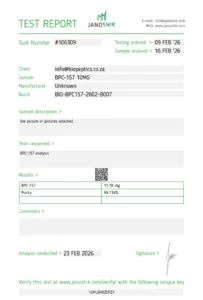
How It Works
1. Tissue-Repair & Regenerative-Signaling Research
BPC-157 (Body Protection Compound-157) is a synthetic peptide researched for its interaction with tissue-repair, regenerative, and recovery-focused signaling pathways.
Research involving BPC-157 commonly investigates its interaction with:
- Tissue-remodeling pathways
- Fibroblast-related signaling
- Connective-tissue and extracellular-matrix mechanisms
- Recovery-focused regenerative signaling
- Tissue-maintenance and adaptive-response pathways
Research commonly explores how these pathways may interact with tendons, ligaments, muscles, connective tissue, and broader recovery-focused physiological research models.
2. Angiogenesis & Vascular-Support Research
BPC-157 is widely researched for its interaction with:
- Angiogenesis-related signaling pathways
- Blood-vessel and vascular-support mechanisms
- Tissue-support and tissue-maintenance pathways
- Recovery-focused physiological signaling
- Physiological-resilience mechanisms
Research commonly investigates how vascular-support pathways may interact with tissue-remodeling and regenerative mechanisms within recovery-focused research settings.
3. Gut-Integrity & Gastrointestinal Research
Research involving BPC-157 commonly investigates its interaction with:
- Gut-integrity and barrier-function pathways
- Gastrointestinal tissue-maintenance mechanisms
- Cellular-maintenance and adaptive-response pathways
- Recovery-focused gastrointestinal signaling
- Inflammation-related pathways within gastrointestinal research models
Because of its interaction with tissue-maintenance pathways, BPC-157 is frequently investigated in gastrointestinal and gut-integrity research settings.
4. Inflammation & Oxidative-Stress Research
BPC-157 is also commonly researched for its interaction with:
- Inflammation-related signaling pathways
- Oxidative-stress regulation mechanisms
- Cellular-resilience pathways
- Recovery-focused physiological signaling
- Tissue-maintenance and regenerative mechanisms
Research commonly explores how oxidative-stress regulation and inflammation-related pathways may interact with regenerative and tissue-maintenance research models.
5. Nervous-System & Adaptive-Response Research
Additional research interest has explored BPC-157 within:
- Neuroregulatory and nervous-system–related pathways
- Cellular-maintenance and adaptive-response mechanisms
- Recovery-focused physiological signaling
- Physiological-resilience pathways
- Tissue-support and regenerative mechanisms
Research involving these pathways remains ongoing within broader regenerative and tissue-maintenance investigations.
6. Cellular-Maintenance & Physiological-Resilience Research
Because BPC-157 interacts with multiple regenerative and tissue-maintenance pathways, it is commonly researched for its interaction with:
- Cellular-maintenance mechanisms
- Adaptive-response signaling pathways
- Tissue-remodeling and regenerative signaling
- Recovery-focused physiological pathways
- Physiological-resilience and healthy-aging research models
Research commonly investigates how these pathways may interact within broader regenerative, gut-integrity, connective-tissue, and recovery-focused research settings.
For Research Use Only
Not intended to diagnose, treat, cure, or prevent any disease.
Research Applications
1. Tissue-Repair & Regenerative Research
BPC-157 is widely researched for its interaction with:
- Tissue-remodeling pathways
- Recovery-focused regenerative signaling
- Fibroblast-related mechanisms
- Connective-tissue and extracellular-matrix pathways
- Tendon-, ligament-, and muscle-related research
- Tissue-maintenance and physiological-resilience mechanisms
Research commonly investigates BPC-157 within recovery-focused and connective-tissue research models.
2. Gut-Integrity & Gastrointestinal Research
Research involving BPC-157 commonly investigates:
- Gut-integrity and barrier-function pathways
- Gastrointestinal tissue-maintenance signaling
- Recovery-focused gastrointestinal mechanisms
- Inflammation-related gastrointestinal pathways
- Cellular-maintenance and adaptive-response signaling
These pathways have contributed to broader research interest in BPC-157 within gastrointestinal and barrier-function research settings.
3. Angiogenesis & Vascular-Support Research
BPC-157 is frequently researched for its interaction with:
- Angiogenesis-related pathways
- Blood-vessel and vascular-support signaling
- Vascular-support and tissue-maintenance mechanisms
- Recovery-focused regenerative pathways
- Tissue-maintenance and physiological-resilience signaling
Research commonly explores how vascular-support pathways may interact with tissue-remodeling and regenerative mechanisms.
4. Connective-Tissue & Mobility Research
Research involving BPC-157 commonly investigates:
- Tendon- and ligament-related pathways
- Connective-tissue signaling mechanisms
- Recovery-focused mobility research
- Tissue-remodeling and extracellular-matrix pathways
- Muscle-support and physiological-maintenance mechanisms
These pathways have contributed to broader research interest in BPC-157 within movement-, mobility-, and recovery-focused research models.
5. Inflammation & Oxidative-Stress Research
Research involving BPC-157 commonly investigates:
- Inflammation-related signaling pathways
- Oxidative-stress regulation mechanisms
- Cellular-resilience pathways
- Recovery-focused physiological signaling
- Tissue-maintenance and regenerative mechanisms
Research interest commonly explores how these pathways may interact within broader regenerative and physiological-resilience research models.
6. Nervous-System & Neuroregulatory Research
Additional research interest has explored BPC-157 within:
- Neuroregulatory and nervous-system–related pathways
- Cellular-maintenance and adaptive-response mechanisms
- Recovery-focused physiological signaling
- Physiological-resilience pathways
- Tissue-support and regenerative research
Research involving these pathways remains ongoing within broader regenerative and recovery-focused investigations.
7. Recovery & Healthy-Aging Research
Because BPC-157 interacts with multiple regenerative and tissue-maintenance pathways, it is frequently investigated in:
- Recovery-focused physiological research
- Healthy-aging and physiological-maintenance models
- Tissue-support and regenerative investigations
- Connective-tissue and mobility-related research
- Cellular-maintenance and resilience pathways
Research commonly investigates how these pathways may interact within broader regenerative and recovery-focused research settings.
8. Lung & Respiratory Research
Additional research interest has explored BPC-157 within:
- Lung-tissue and respiratory-related pathways
- Tissue-remodeling and extracellular-matrix mechanisms
- Oxidative-stress regulation within respiratory research models
- Recovery-focused respiratory signaling
- Physiological-resilience and tissue-maintenance pathways
Research involving these pathways remains ongoing within broader regenerative and respiratory-related investigations.
For Research Use Only
Not intended to diagnose, treat, cure, or prevent any disease.
Synergistic Effect
BPC-157 is commonly researched alongside complementary regenerative, recovery-focused, gut-integrity, and metabolic-support compounds because of its broad interaction with tissue-remodeling, angiogenesis-related, connective-tissue, and physiological-resilience pathways.
Because BPC-157 interacts with multiple tissue-maintenance and regenerative signaling mechanisms, it is frequently investigated as part of broader multi-pathway recovery-focused, connective-tissue, gut-integrity, and healthy-aging research protocols.
Common Synergistic Research Combinations
BPC-157 + TB-500 (Thymosin Beta-4 Fragment)
Frequently investigated for complementary interaction with:
- Tissue-remodeling pathways
- Recovery-focused regenerative signaling
- Cellular-migration and connective-tissue mechanisms
- Recovery-focused physiological pathways
- Mobility-related and tissue-maintenance research
This combination is commonly researched in recovery-focused and regenerative research settings involving tendons, ligaments, muscles, and connective tissue.
BPC-157 + GHK-Cu
Commonly researched for complementary interaction with:
- Collagen-related signaling pathways
- Tissue-remodeling and regenerative mechanisms
- Skin-integrity and dermal-maintenance pathways
- Recovery-focused physiological signaling
- Extracellular-matrix and connective-tissue pathways
Research commonly investigates broader regenerative and tissue-maintenance signaling mechanisms involving these compounds.
BPC-157 + KPV
Frequently investigated for complementary interaction with:
- Gut-integrity and barrier-function pathways
- Inflammation-related signaling mechanisms
- Physiological-resilience pathways
- Gastrointestinal tissue-maintenance research
- Recovery-focused physiological signaling
Research involving these pathways commonly explores broader gut-support and inflammation-related research models.
BPC-157 + Glutathione
Commonly researched for complementary interaction with:
- Antioxidant-defense pathways
- Oxidative-stress regulation
- Recovery-focused physiological mechanisms
- Cellular-resilience signaling
- Tissue-maintenance and adaptive-response pathways
Research commonly explores how antioxidant-support pathways may interact with regenerative and recovery-focused mechanisms.
BPC-157 + NAD⁺
Frequently investigated for complementary interaction with:
- Cellular-energy pathways
- Recovery-focused physiological signaling
- Mitochondrial-support mechanisms
- Healthy-aging–related research
- Cellular-maintenance pathways
Research commonly investigates broader regenerative and physiological-resilience pathways involving these compounds.
BPC-157 + MOTS-c
Commonly researched in:
- Metabolic-regulation research
- Cellular-energy and mitochondrial-signaling pathways
- Recovery-focused metabolic investigations
- Physiological-resilience research
- Healthy-aging research models
Research involving these compounds commonly explores how metabolic-support pathways may interact with regenerative and recovery-focused signaling mechanisms.
Combined Research Profile
When investigated alongside complementary regenerative, antioxidant-support, gut-support, or metabolic-support compounds, BPC-157 is commonly researched for broader interaction with:
- Tissue-remodeling and regenerative pathways
- Connective-tissue and extracellular-matrix mechanisms
- Gut-integrity and barrier-function signaling
- Recovery-focused physiological pathways
- Angiogenesis- and vascular-support mechanisms
- Inflammation-related and oxidative-stress pathways
- Healthy-aging and physiological-resilience research
Because BPC-157 interacts with multiple regenerative and tissue-maintenance pathways, it is commonly investigated as part of broader multi-pathway recovery-focused, connective-tissue, gut-support, and physiological-maintenance research protocols.
For Research Use Only
Not intended to diagnose, treat, cure, or prevent any disease.
Compound Name:
BPC-157
Chemical Classification:
Synthetic Gastric Pentadecapeptide Fragment
Composition:
BPC-157 is a synthetic peptide fragment derived from the naturally occurring Body Protection Compound (BPC) originally associated with gastric protective research pathways. It consists of a stable 15-amino-acid peptide sequence commonly researched for its interaction with tissue-repair, recovery-focused, and regenerative signaling pathways.
Peptide Characteristics:
- Synthetic pentadecapeptide (15 amino acids)
- Derived from gastric protective peptide research
- Stable peptide structure for regenerative and recovery-focused studies
- Commonly researched in musculoskeletal, gastrointestinal, vascular-support, and neurorecovery models
Amino Acid Sequence:
Gly-Glu-Pro-Pro-Pro-Gly-Lys-Pro-Ala-Asp-Asp-Ala-Gly-Leu-Val
Molecular Formula:
C₆₂H₉₈N₁₆O₂₂
Appearance:
White to off-white lyophilised powder
Solubility:
Water soluble
Research Category:
Regenerative and tissue-repair research peptide
Common Research Areas:
- Tendon-, ligament-, and muscle-repair research
- Gastrointestinal-integrity and mucosal-maintenance studies
- Tissue-repair and angiogenesis-related pathway research
- Neuroregulatory and neurorecovery investigations
- Inflammation-related and recovery-focused research models
- Collagen-organization and fibroblast-related signaling studies
Stability:
Typically supplied in lyophilised form to support peptide stability, purity, and long-term storage integrity during laboratory handling and research use.
For Research Purposes Only
Not intended for human consumption or therapeutic use.
BPC-157 (10mg) — Research Dosage Guidance
Tissue-Repair Research • Recovery Physiology • Inflammation-Modulation Research • Gastrointestinal Research
Reconstitution (Mixing)
- Add 2ml bacteriostatic water to the vial
- Roll gently between palms (do not shake aggressively)
- Store reconstituted vial refrigerated at 2–8°C
Concentration Calculation
10mg mixed with 2ml bacteriostatic water provides a concentration of:
- 5mg/ml
Quick Reference
- Every 10 insulin units (0.1ml) = 500mcg
- Every 1 insulin unit = 50mcg
Core Research Dosage Guidelines
Introductory Research Protocol
- 250mcg per administration
- Frequency: 1–2× daily
Standard Research Protocol
- 300–500mcg per administration
- Frequency: 1–2× daily
Advanced Research Protocol
- 500–750mcg twice daily
Administration
- Subcutaneous or intramuscular administration
- Rotate administration sites regularly
Dose Conversion Table
| Dose | Volume | Insulin Units |
|---|---|---|
| 250mcg | 0.05ml | 5 units |
| 300mcg | 0.06ml | 6 units |
| 500mcg | 0.10ml | 10 units |
| 750mcg | 0.15ml | 15 units |
| 1mg | 0.20ml | 20 units |
Targeted Research Protocols
1. Acute Injury & Tissue-Repair Research
(Strains, tears, post-procedure recovery models)
- Dose: 500–750mcg
- Frequency: Twice daily
- Timing: Morning and evening
- Duration: 4–6 weeks
Research Notes
Intramuscular administration near targeted areas or subcutaneous administration is commonly researched.
2. Chronic Inflammation & Recovery Research
(Tendinitis, repetitive-strain, and joint-stress research models)
- Dose: 250–500mcg
- Frequency: 1–2× daily
- Duration: 6–8 weeks
Research Notes
Consistent administration and administration-site rotation are commonly utilized in recovery-focused protocols.
3. Gastrointestinal & Gut-Integrity Research
(Mucosal-integrity and gastrointestinal recovery models)
- Dose: 250–500mcg
- Frequency: Once daily
- Timing: Evening administration commonly researched
- Duration: 4–8 weeks
Research Notes
Subcutaneous administration is commonly utilized in gastrointestinal research protocols.
4. Post-Procedure & Intensive Recovery Research
- Dose: 750mcg
- Frequency: Twice daily
- Duration: 6–8 weeks
Research Notes
Higher-frequency or higher-range protocols are typically investigated in more intensive recovery-focused research models.
5. Maintenance & Recovery-Support Research
- Dose: 250mcg
- Frequency: 3–5 days weekly
- Duration: Variable depending on research objectives
Research Notes
Lower-frequency protocols are commonly researched following completion of full recovery-focused cycles.
Approximate Vial Duration (Based on Total Daily Amount)
| Total Daily Amount | Approximate Duration |
|---|---|
| 250mcg daily | ~40 days |
| 500mcg daily | ~20 days |
| 750mcg daily | ~13 days |
| 1mg daily | ~10 days |
Commonly Investigated Research Areas
- Tendon-, ligament-, muscle-, and connective-tissue repair research
- Inflammation-modulation and recovery-focused models
- Gastrointestinal-integrity and mucosal-maintenance studies
- Neuroregulatory and neurorecovery research
- Tissue-repair and angiogenesis-related pathway investigations
- Collagen-organization and fibroblast-related signaling research
Important Research Notes
- Always use sterile needles and alcohol swabs
- Do not reuse or share needles
- Store reconstituted peptide refrigerated at 2–8°C
- Protect from excessive heat and direct sunlight
- Do not shake aggressively after mixing
For Research Use Only
Not intended to diagnose, treat, cure, or prevent any disease.
Possible Side Effects
BPC-157 is generally regarded in research settings as a well-tolerated regenerative and tissue-support peptide. Observed responses may vary depending on dosage range, administration frequency, protocol duration, and individual sensitivity.
Commonly Reported Research Observations
- Mild injection-site redness or irritation
- Temporary swelling or warmth sensation
- Mild headaches
- Temporary fatigue or tiredness
- Mild nausea or digestive discomfort
- Temporary dizziness or light-headedness
- Temporary appetite-related variability
Because BPC-157 is researched for its interaction with regenerative, tissue-remodeling, angiogenesis-related, and gut-integrity pathways, some research settings may observe variability in recovery-focused or gastrointestinal-response variability.
Additional Research Considerations
Improper storage, mixing, or administration techniques may increase the likelihood of:
- Injection-site irritation
- Local inflammation
- Reduced peptide stability or consistency
Because BPC-157 interacts with regenerative and angiogenesis-related pathways, research involving active or suspected malignancies or abnormal proliferative research models may warrant additional monitoring and individualized evaluation.
Responses and tolerability observations may vary depending on:
- Dosage range
- Administration frequency
- Protocol duration
- Physiological status
- Overall individual sensitivity
For Research Use Only
Not intended to diagnose, treat, cure, or prevent any disease.
Use With Caution / Additional Monitoring in Research Contexts
Because BPC-157 is researched for its interaction with regenerative, tissue-remodeling, angiogenesis-related, inflammatory-response, and gastrointestinal pathways, certain research settings may warrant additional monitoring and individualized evaluation.
Additional Monitoring May Be Considered In Research Models Involving:
- Gastrointestinal inflammatory conditions
- Chronic inflammatory or recovery-focused research models
- Cardiovascular or vascular-related investigations
- Multiple concurrent regenerative or recovery-focused compounds
- Significant sensitivity to peptide compounds
Avoid or Carefully Evaluate In Research Models With:
- Known hypersensitivity to peptide compounds
- Active severe systemic illness
- Active or suspected malignancies or abnormal proliferative research models
- Pregnancy or breastfeeding contexts
Additional Research Considerations
Because BPC-157 is frequently researched for regenerative, vascular-support, and gut-integrity pathways, research protocols may warrant monitoring of:
- Gastrointestinal-response variability
- Injection-site response
- Recovery-focused signaling pathways
- Vascular and circulatory-response patterns
- Overall individual tolerance and physiological-response variability
Combination protocols involving:
- TB-500
- KPV
- GHK-Cu
- Growth hormone–related peptides
may further influence regenerative and recovery-focused signaling pathways.
Important Notice
BPC-157 is supplied strictly as a laboratory research compound and is not approved to diagnose, treat, cure, or prevent any disease.
For Research Use Only
Not intended for human consumption or therapeutic use.
Summary
BPC-157 is a synthetic peptide fragment derived from the naturally occurring Body Protection Compound (BPC) originally associated with gastric protective research pathways and is widely researched for its interaction with tissue-repair, recovery-focused, inflammatory-response, vascular-support, and gastrointestinal pathways.
Research involving BPC-157 commonly investigates its interaction with:
- Tendon- and ligament-related pathways
- Muscle- and connective-tissue signaling
- Gastrointestinal-integrity and gut-barrier pathways
- Angiogenesis- and vascular-support pathways
- Neuroregulatory and recovery-focused signaling mechanisms
Its broad regenerative and recovery-focused research profile has contributed to growing research interest across musculoskeletal, gastrointestinal, vascular-support, and neuroregulatory research models.
Observed responses in research settings are generally reported as mild and may include:
- Temporary injection-site irritation
- Headaches
- Mild digestive discomfort
- Temporary fatigue
- Localized redness
depending on dosage range, administration method, protocol duration, and individual sensitivity.
Proper reconstitution, sterile handling practices, consistent administration protocols, and regular administration-site rotation are important for maintaining peptide stability and minimizing local irritation during research use.
For Research Use Only
Not intended to diagnose, treat, cure, or prevent any disease.
Be the first to review “BPC-157 – 10 mg (Body Protection Compound-157)”
Related products


Reviews
There are no reviews yet.