
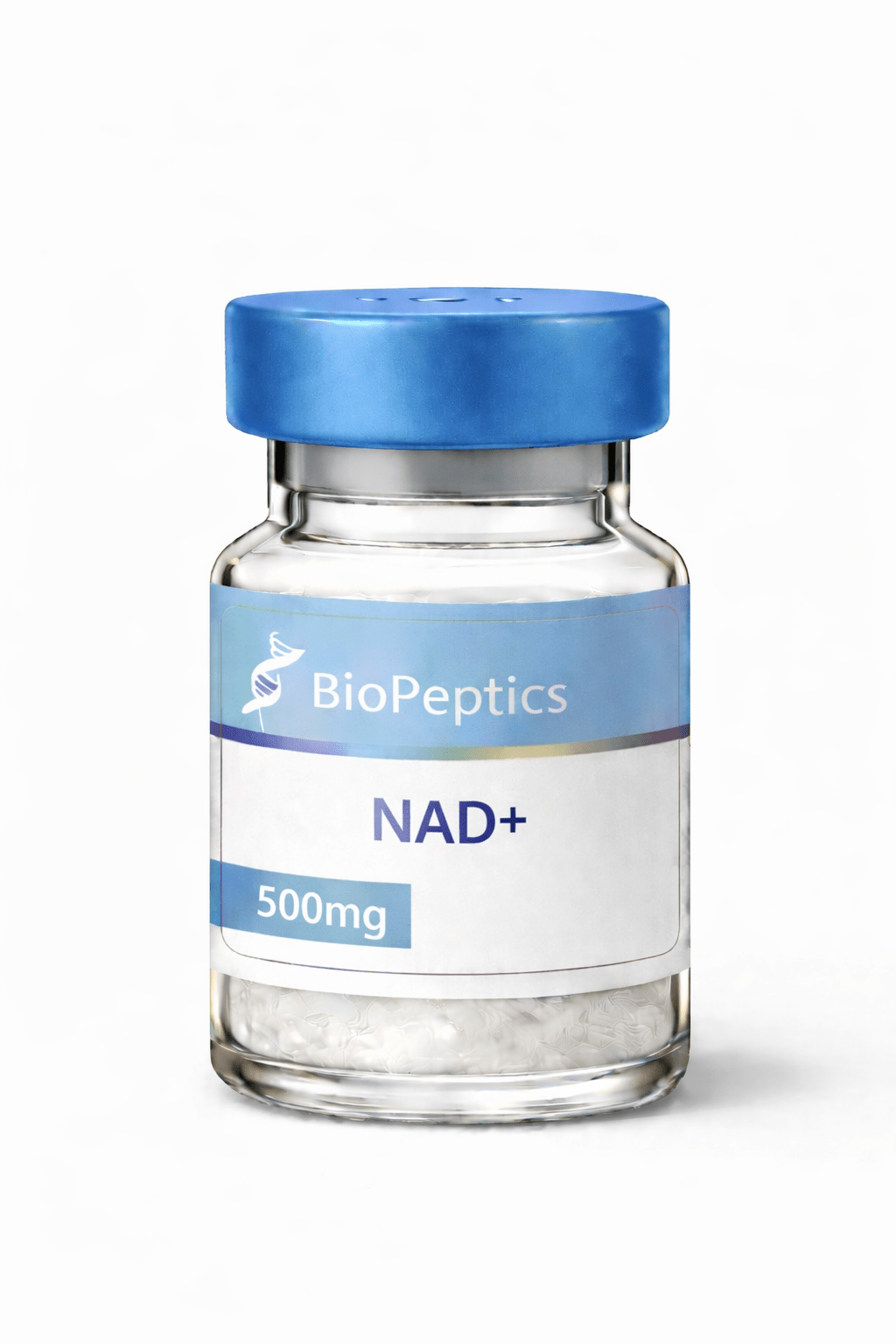
NAD⁺ 500mg (β-Nicotinamide Adenine Dinucleotide) Cellular-Energy & Mitochondrial Research Compound
R 1,500.00
NAD⁺ is a naturally occurring coenzyme present in all living cells and is widely researched for its interaction with cellular-energy metabolism, mitochondrial function, metabolic regulation, neuroregulatory signaling, and healthy-aging–related pathways.
NAD⁺ plays a central role in cellular-energy production and is involved in biological processes associated with ATP generation, mitochondrial activity, oxidative-stress regulation, DNA-repair pathways, and cellular signaling mechanisms.
Research involving NAD⁺ commonly investigates its interaction with:
- Cellular-energy and ATP-production pathways
- Mitochondrial-function and metabolic-signaling mechanisms
- Neuroregulatory and neuroprotective pathways
- Oxidative-stress and cellular-maintenance signaling
- Recovery-focused and healthy-aging research
- Cognitive-performance and mental-energy investigations
Research observations commonly investigate:
- Energy- and vitality-related responses
- Mental-clarity and focus-related observations
- Recovery-focused physiological responses
- Cognitive-endurance investigations
- Physiological-resilience and wellbeing-related pathways
Because of its broad metabolic and mitochondrial research profile, NAD⁺ is frequently investigated alongside compounds such as:
- Semax
- Selank
- MOTS-c
- Recovery-focused research peptides
These combination protocols are commonly explored in cellular-energy, neuroregulatory, mitochondrial-, and metabolic-related research models.
Responses and tolerability observations may vary depending on:
- Dosage range
- Administration method
- Metabolic status
- Stress levels
- Sleep quality
- Overall physiological sensitivity
BioPeptics™ NAD⁺ is supplied in sterile lyophilised vial form for enhanced peptide stability and is independently third-party tested for identity and purity verification.
For Research Use Only
Not intended for human consumption or therapeutic use.
In stock
How It Works
NAD⁺ (Nicotinamide Adenine Dinucleotide) is a naturally occurring coenzyme involved in cellular-energy production and metabolic regulation.
It is commonly researched for its potential interaction with:
- Mitochondrial function
- ATP-production pathways
- Oxidative-stress regulation
- Neuroprotective signaling
- Healthy-aging–related research models
Cellular-Energy & Metabolic Research
NAD⁺ plays a central role in cellular metabolism and is involved in biological processes related to:
- ATP and cellular-energy production
- Mitochondrial-function pathways
- Oxidative-stress and cellular-repair signaling
- Metabolic and neuroregulatory pathways
- DNA-repair and cellular-maintenance mechanisms
- Recovery-focused and healthy-aging research
Mitochondrial & Cellular-Signaling Research
Research involving NAD⁺ frequently investigates its potential interaction with:
- Cellular-energy and metabolic-efficiency pathways
- Mitochondrial-function and cellular-resilience pathways
- Neuroprotective and cognitive-performance pathways
- Recovery-related physiological signaling
- Stress-response and cellular-adaptation mechanisms
Because NAD⁺ is fundamental to mitochondrial and metabolic activity, experimental models commonly investigate its interaction with:
- Cellular-energy and ATP-related pathways
- Neuroregulatory and cognitive-performance signaling
- Metabolic and mitochondrial-function research
- Recovery and physiological-resilience models
- Healthy-aging and cellular-maintenance pathways
Combination Research Models
Research also commonly explores NAD⁺ alongside compounds such as:
- Semax
- Selank
- MOTS-c
- 5-Amino-1MQ
- Recovery-focused peptides and metabolic research compounds
These combination protocols are investigated for complementary:
- Mitochondrial pathways
- Neuroregulatory signaling
- Metabolic-function pathways
- Recovery-focused signaling mechanisms
Metabolic & Neuroregulatory Research Profile
Unlike stimulant-based compounds, NAD⁺ is researched for its broader metabolic and mitochondrial-support research profile involving:
- Cellular-energy production
- Physiological resilience
- Neuroregulatory pathways
- Metabolic-function signaling
For Research Use Only
Not intended to diagnose, treat, cure, or prevent any disease.
Cellular-Energy & Mitochondrial Research
NAD⁺ is widely researched for its potential interaction with cellular-energy production and mitochondrial-function pathways.
Research models commonly investigate:
- ATP-production and energy-metabolism signaling
- Mitochondrial-function and resilience pathways
- Cellular-energy efficiency research
- Metabolic-adaptation mechanisms
- Physiological-resilience signaling
Neuroprotective & Cognitive-Performance Research
Research involving NAD⁺ frequently explores its potential role in:
- Neuroprotective signaling pathways
- Cognitive-performance and mental-energy research
- Neuroregulatory and neuroplasticity-related mechanisms
- Focus and cognitive-endurance pathways
- Brain-energy metabolism studies
Oxidative-Stress & Cellular-Repair Research
Because NAD⁺ is involved in cellular-maintenance pathways, experimental models commonly investigate:
- Oxidative-stress regulation
- Cellular-repair and maintenance signaling
- DNA-repair pathway research
- Cellular-resilience mechanisms
- Recovery-focused physiological pathways
Metabolic & Healthy-Aging Research
NAD⁺ is also commonly researched in models involving:
- Metabolic-function and mitochondrial signaling
- Healthy-aging–related and cellular-maintenance pathways
- Recovery-focused metabolic physiology
- Stress-response and cellular-adaptation research
- Physiological-maintenance mechanisms
Recovery & Physiological-Resilience Research
Experimental models frequently investigate NAD⁺ in:
- Recovery-focused physiological research
- Energy-metabolism and recovery-related pathways
- Exercise-recovery and metabolic-adaptation studies
- Cellular-resilience and recovery signaling
- Neuroregulatory and metabolic-recovery models
Combination Metabolic & Neuroregulatory Research
NAD⁺ is frequently researched alongside:
- Semax
- Selank
- MOTS-c
- 5-Amino-1MQ
- Recovery-focused peptides and metabolic research compounds
These combination protocols are investigated for complementary:
- Mitochondrial pathways
- Neuroregulatory signaling
- Metabolic-function pathways
- Recovery-focused signaling mechanisms
For Research Use Only
Not intended to diagnose, treat, cure, or prevent any disease.
Synergistic Research Applications
NAD⁺ (Nicotinamide Adenine Dinucleotide) is frequently researched alongside complementary metabolic, mitochondrial, neuroregulatory, and recovery-focused compounds due to its central role in cellular-energy production and mitochondrial-function pathways.
In experimental settings, combination protocols are commonly investigated for their potential interaction with:
- ATP-production signaling
- Physiological-resilience pathways
- Neuroregulatory signaling
- Metabolic-adaptation mechanisms
- Recovery-focused pathways
- Mitochondrial-function research
With MOTS-c
One of the most commonly researched combinations involves NAD⁺ and MOTS-c.
NAD⁺ is commonly investigated for mitochondrial-function and cellular-energy pathways, while MOTS-c is researched for metabolic regulation, glucose-utilization pathways, and exercise-adaptation signaling.
Research models explore whether this combination may influence:
- Cellular-energy and mitochondrial-function pathways
- Metabolic-efficiency signaling
- Exercise-adaptation and recovery-focused pathways
- Physiological-resilience research
- Metabolic and mitochondrial-adaptation mechanisms
With Semax & Selank
NAD⁺ is also frequently researched alongside Semax and Selank in neuroregulatory and cognitive-performance-focused protocols.
These combinations are investigated for complementary roles involving:
- Neuroprotective and neuroregulatory pathways
- Cognitive-performance and mental-energy research
- Stress-response and neurochemical signaling
- Neuroplasticity and recovery-focused pathways
- Cognitive-endurance and resilience models
With 5-Amino-1MQ & Metabolic Research Compounds
Research involving NAD⁺ commonly explores combinations with:
- 5-Amino-1MQ
- Metabolic-regulation peptides
- Mitochondrial-support research compounds
- Metabolic and recovery-focused research compounds
These protocols investigate complementary:
- Metabolic-efficiency pathways
- Mitochondrial-function signaling
- Cellular-energy pathways
- Recovery-focused metabolic mechanisms
With Recovery & Healthy-Aging Research Models
Because NAD⁺ is researched for its central role in cellular-energy and mitochondrial pathways, it is often included in broader experimental models investigating:
- Recovery-focused physiological signaling
- Healthy-aging–related and cellular-maintenance pathways
- Oxidative-stress and resilience mechanisms
- Exercise-recovery and metabolic-adaptation pathways
- Neuroregulatory and metabolic-adaptation research
Mitochondrial & Cellular-Energy Research Profile
Unlike stimulant-based compounds, NAD⁺ is researched for its broader mitochondrial and cellular-energy research profile involving:
- ATP-production pathways
- Physiological resilience
- Metabolic regulation
- Neuroregulatory signaling
For Research Use Only
Not intended to diagnose, treat, cure, or prevent any disease.
Technical Information
Compound Name:
NAD⁺ (Nicotinamide Adenine Dinucleotide)
Chemical Classification:
Naturally Occurring Cellular Coenzyme
Composition
NAD⁺ (Nicotinamide Adenine Dinucleotide) is a naturally occurring coenzyme present in all living cells and is commonly researched for its potential interaction with:
- Cellular-energy production
- Mitochondrial-function pathways
- Metabolic regulation
- Neuroprotective signaling
- Cellular-maintenance mechanisms
Compound Characteristics
- Naturally occurring cellular coenzyme
- Mitochondrial and metabolic research compound
- Commonly researched for ATP-production and cellular-energy pathways
- Investigated for neuroregulatory and recovery-related signaling pathways
- Frequently studied in healthy-aging and physiological-resilience research models
Molecular Formula:
C₂₁H₂₇N₇O₁₄P₂
Molecular Weight:
663.43 g/mol
Appearance:
White to off-white lyophilized powder
Solubility:
Water soluble
Research Category:
Mitochondrial, metabolic, and neuroregulatory research compound
Common Research Areas
- Cellular-energy and ATP-production research
- Mitochondrial-function and metabolic-signaling studies
- Neuroprotective and cognitive-performance investigations
- Oxidative-stress and cellular-maintenance research
- Recovery-focused physiological-resilience models
- Healthy-aging and metabolic-adaptation pathways
Stability
NAD⁺ is typically supplied in lyophilized form to support compound stability, purity, and long-term storage integrity during laboratory handling and research use.
For Research Purposes Only
Not intended to diagnose, treat, cure, or prevent any disease.
NAD⁺ (Nicotinamide Adenine Dinucleotide) — Research Dosage Guidance
Cellular-Energy Research • Mitochondrial Support • Healthy-Aging–Related & Recovery Research
Reconstitution (Mixing)
- Add 3.0ml bacteriostatic water to the vial
- Roll gently between palms (do not shake)
- Store reconstituted vial in the refrigerator (2–8°C)
Concentration Calculation
500mg mixed with 3ml bacteriostatic water provides an approximate concentration of:
- 166.7mg/ml
- Every 10 insulin units (0.1ml) ≈ 16.7mg NAD⁺
- Every 1 insulin unit (0.01ml) ≈ 1.67mg NAD⁺
Core Research Guidelines
For mitochondrial-function, cellular-energy, metabolic, and recovery-focused research:
- General research amount: 25–100mg per administration
- Common research frequency: 2–5 times weekly
Common Administration Routes
- Subcutaneous administration
- Intramuscular administration
- Intravenous administration is discussed in some research settings and should only be conducted in appropriately controlled laboratory environments
Syringe Measurement Guide
| Desired Amount | Volume (ml) | U100 Insulin Syringe Units |
|---|---|---|
| 10mg | 0.06ml | 6 units |
| 25mg | 0.15ml | 15 units |
| 50mg | 0.30ml | 30 units |
| 75mg | 0.45ml | 45 units |
| 100mg | 0.60ml | 60 units |
Reference Guide
- 1 insulin unit ≈ 1.67mg NAD⁺
- 10 insulin units ≈ 16.7mg NAD⁺
Targeted Research Protocols
1. Cellular-Energy & Physiological-Resilience Research
- Research amount: 25–50mg
- Frequency: 2–3 times weekly
- Duration: 4–6 weeks
Research Notes
Commonly investigated in cellular-energy and physiological-resilience research models.
2. Cognitive & Neuroregulatory Research
- Research amount: 25–75mg
- Frequency: 3 times weekly
- Duration: 4–8 weeks
Research Notes
Frequently researched in cognitive-performance and neuroenergy-focused pathways.
3. Healthy-Aging & Cellular-Maintenance Research
- Research amount: 50–100mg
- Frequency: 3–5 times weekly
- Duration: 6–8 weeks
Research Notes
Commonly investigated in mitochondrial-function and cellular-maintenance research models.
4. Metabolic & Mitochondrial Research
- Research amount: 50mg
- Frequency: 3–5 times weekly
Research Notes
Frequently researched alongside compounds such as:
- 5-Amino-1MQ
- MOTS-c
- GLOW Blend
- KLOW Blend
These combination protocols are investigated for complementary:
- Mitochondrial pathways
- Metabolic signaling
- Recovery-focused mechanisms
5. Long-Term Cellular-Energy Research
- Research amount: 25–50mg
- Frequency: 2–3 times weekly
- Duration: Variable depending on research objectives
Research Notes
Lower-frequency research protocols are commonly investigated following more intensive mitochondrial and recovery-focused research cycles.
Cycle Duration
- Typical research cycle: 4–8 weeks
- Lower-frequency protocols: 25–50mg, 2–3 times weekly
- Repeat cycles may be utilized depending on research objectives
Important Research Notes
- Always use sterile needles and alcohol swabs
- Do not reuse or share needles
- Store reconstituted compound refrigerated at 2–8°C
- Protect from excessive heat and direct sunlight
For Research Use Only
Not intended to diagnose, treat, cure, or prevent any disease.
Possible Side Effects
Observed in Research & Clinical Settings
NAD⁺ (Nicotinamide Adenine Dinucleotide) is generally regarded in research settings as a well-tolerated metabolic and mitochondrial research compound.
Observed responses may vary depending on:
- Research amount
- Administration route
- Administration speed
- Protocol duration
- Metabolic status
- Individual physiological sensitivity
Commonly Reported Research Observations
- Temporary flushing or warmth-related observations
- Mild nausea-related observations
- Headache-related observations
- Temporary fatigue or light-headedness
- Administration-site redness or irritation
- Mild muscle discomfort with intramuscular administration
- Temporary chest-discomfort observations during rapid administration in sensitive research models
Mitochondrial & Metabolic Research Considerations
Because NAD⁺ is researched for its interaction with mitochondrial and metabolic pathways, some research settings may observe:
- Temporary energy-related response variability
- Variability in metabolic-response signaling
- Temporary appetite-related observations
- Altered wakefulness- or alertness-related observations
- Temporary recovery-related response variability
Neuroregulatory & Cognitive Research Considerations
Research involving NAD⁺ commonly investigates pathways associated with neuroregulatory and cognitive-performance signaling.
Some experimental models may observe:
- Temporary increases in alertness
- Temporary mood-related variability
- Variability in cognitive-endurance perception
- Increased sensitivity in stimulant- or neurochemically sensitive research models
Administration & Infusion Considerations
Rapid administration — particularly intravenous administration — may increase the likelihood of:
- Nausea-related observations
- Flushing-related observations
- Temporary chest-discomfort observations
- Headache-related observations
- Temporary administration-related discomfort
Slower administration protocols are commonly utilized in controlled research settings.
Injection & Handling Considerations
Improper storage, reconstitution, or administration techniques may increase the likelihood of:
- Administration-site irritation
- Local inflammation
- Reduced compound stability or integrity
Additional Research Notes
- Higher research amounts do not necessarily produce proportionally greater observations and may increase the likelihood of side-effect–related observations
- Individual responses may vary depending on metabolic status, hydration, stress levels, sleep quality, and concurrent metabolic or neuroregulatory compounds
- Combination protocols involving MOTS-c, Semax, Selank, 5-Amino-1MQ, or other mitochondrial-support compounds may influence overall metabolic and neuroregulatory response patterns
For Research Use Only
Not intended to diagnose, treat, cure, or prevent any disease.
Use With Caution / Additional Monitoring in Research Contexts
Because NAD⁺ (Nicotinamide Adenine Dinucleotide) is researched for its interaction with mitochondrial, metabolic, neuroregulatory, and cellular-energy pathways, research involving complex cardiovascular, metabolic, neurological, hepatic, renal, or neuroendocrine conditions may warrant additional monitoring and individualized evaluation.
Additional Monitoring May Be Considered In Research Models Involving:
- Cardiovascular or significant cardiometabolic conditions
- Blood-pressure regulation sensitivity
- Metabolic or mitochondrial disorders
- Neurological sensitivity or chronic migraines
- Liver or kidney impairment
- Mood-related or neuroendocrine conditions
- Sleep-related disorders or significant insomnia
- Multiple concurrent metabolic, mitochondrial, stimulant, or neuroregulatory compounds
Avoid or Carefully Evaluate in Research Models With:
- Known hypersensitivity to NAD⁺ or related compounds
- Severe uncontrolled cardiovascular disease
- Severe uncontrolled metabolic or neurological conditions
- Active severe systemic illness
- Pregnancy or breastfeeding contexts
Additional Research Considerations
Because NAD⁺ may influence mitochondrial, neuroregulatory, and metabolic signaling pathways, research protocols may warrant monitoring of:
- Cardiovascular and blood-pressure variability
- Energy- and metabolic-response signaling
- Wakefulness- and neurochemical-response patterns
- Mood-related variability
- Overall individual tolerance and metabolic-response patterns
Rapid intravenous administration protocols may increase the likelihood of:
- Nausea-related observations
- Flushing-related observations
- Temporary chest-discomfort observations
- Temporary administration-related observations
Combination protocols involving MOTS-c, Semax, Selank, 5-Amino-1MQ, or other mitochondrial-support compounds may further influence metabolic and neuroregulatory response pathways.
Important Notice
NAD⁺ is supplied strictly as a laboratory research compound and is not approved to diagnose, treat, cure, or prevent any disease.
For Research Use Only
NAD⁺ is a naturally occurring molecule commonly researched in metabolic and mitochondrial-function studies. Observed responses in research settings are generally mild and may include temporary flushing-related observations, dizziness, nausea-related observations, fatigue-related responses, or administration-related discomfort depending on research amount, administration speed, dilution protocols, and individual physiological sensitivity.
More rapid administration protocols may increase the likelihood of temporary discomfort-related observations in sensitive research models.
For research use only.
Be the first to review “NAD⁺ 500mg (β-Nicotinamide Adenine Dinucleotide) Cellular-Energy & Mitochondrial Research Compound”
Related products





Reviews
There are no reviews yet.